Coming back one afternoon from Elliot key to Coconut Grove with an unusually choppy bay, the starboard engine of our Fountain Pajot Lucia 40 “Andares” stalled. With a lee shore to our starboard, a strong wind blowing from the port side, and the running engine being the port one, it was not possible to steer the boat away from the shallows. We had to anchor and wait to be towed home (Thank you Boat US). Back at our mooring ball in Dinner Key Marina, it was troubleshooting time. Hey, if it didn’t breakdown now and then, it would not be a boat!.
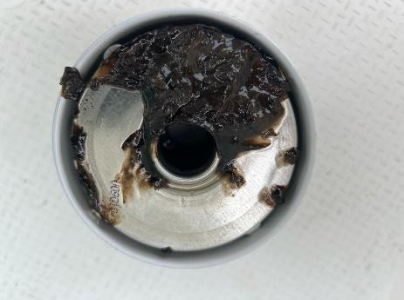
And this was, ladies and gentlemen, how I became aware of Diesel Bug. The fuel line entering the starboard primary fuel filter had an about three inches long blockage of a thick, dark brown goo, that I was to find out was diesel bug. The picture shows the upper face of the filter, where the blocked fuel line had dumped the goo on its way to become completely blocked by it.
How to Declutter
Decluttering in preparation for living on a boat is essential for creating an organized, efficient space. Start by evaluating each item’s value and functionality—if it doesn’t serve a purpose or you haven’t used it in months, it’s time to part with it. Focus on reducing duplicates, excessive clothing, and unnecessary gadgets. Choose lightweight, compact, and multi-purpose items that fit boat life. Remember, storage space is limited, so prioritize essentials. Take it one room or section at a time to avoid feeling overwhelmed, and use the opportunity to embrace a minimalist lifestyle.
A check on the port side engine revealed that, although not as bad as the engine on the other side, it was on its way to a similar breakdown soon.
What is Diesel Bug?
Like often happens in boat life, I quickly transformed from a complete ignorant of this issue, to a expert of sorts by intensively researching the subject matter. Tons of literature can be found on the web, and I like to summarize the phenomenon as microbial contamination that occurs in diesel storage tanks and fuel lines. The presence of water in the fuel provides for the perfect environment for the growth of diesel bug.
How to Fix Diesel Bug
ixing the immediate problem (getting the engine running) is easy, just remove all the goo blocking the fuel lines from the tank to the engine, and change the fuel filters.
How to Prevent Diesel Bug
The first line of defense against diesel bug is to minimize the amount of water in the diesel tanks, including:
Keeping the tanks full to reduce water condensation in the tanks
Regularly drain water from the tanks
Use fuel additives. They come in two types, treatments that attack the water condensation in tanks, and biocides that attack the microbial growth itself.
Fuel polishing
What is Fuel Polishing?
Fuel polishing consists in cycling the content of a fuel tank, pumping the fuel from the tank, running through a fine filtration system and returning the fuel to the tank. This fine filtration will remove water and any impurities from the diesel (Yes, including diesel bug!).
Building a Fuel Polishing System
The minimalist lifestyle offers clear advantages for liveaboard sailors. By living with fewer items, you reduce your environmental impact, as there is less waste and a smaller carbon footprint. Financially, minimalism can help sailors save money by cutting down on unnecessary purchases, from gear to gadgets. The third characteristic of minimalism, mindfulness, also brings mental benefits—by focusing only on the essentials, you can feel more grounded and less stressed.
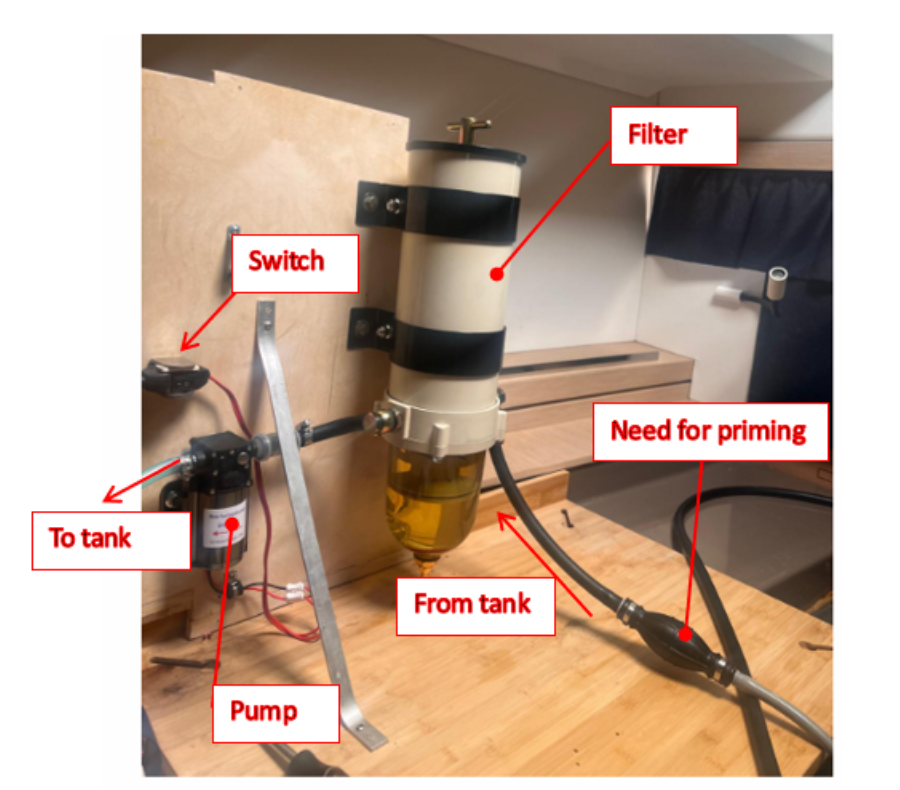
A simple polishing system consists of a Racor type filter, a fuel pump and a way of providing power to the pump. The picture shows the working prototype we build for “Andares”. The prototype worked fine, we will be building a permanent system, and intent to running it every six months to start with, the observed results will indicate whether this period should be reduced or extended.
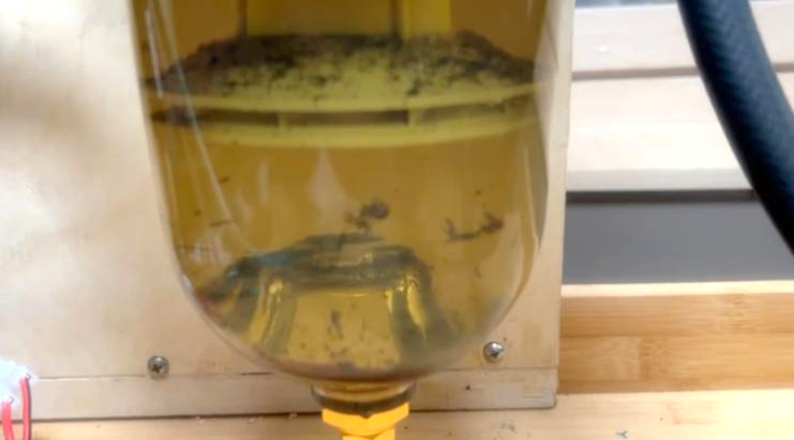
I stated we used a “Racor type” filter instead of as Racor, because of pricing. The knock-off version we bought in Amazon cost less than $65 dollars, a fraction of a similar Racor one. The fuel transfer pump cost less than $52 dollars. The system is rated at 120 gal per hour. Our diesel tank holds 80 gal. Assuming the actual rate of the system is 100 gph, we can recirculate the tank content when full in about 45 minutes. I used hoses and wires we had around the boat, but even if buying these the overall cost should be around $ 150. This is money well spentThe picture shows the filter capturing the diesel bug as it circulates the fuel.
The picture shows the filter capturing the diesel bug as it circulates the fuel.
Get Ahead of Your Maintenance with Boat Mate
Keeping your boat in top shape doesn’t have to be a hassle. With Boat Mate, you can easily track maintenance tasks, schedule routine check-ups, and stay ahead of potential issues before they become costly repairs. Whether you’re a seasoned sailor or new to boat ownership, Boat Mate simplifies upkeep with reminders, checklists, and expert tips—so you can spend less time worrying and more time on the water.